Classification of Antidepressant Drugs | Pharma Info Nepal
Depression is a common mental health disorder characterized by persistent sadness, loss of interest, and a lack of motivation. To treat depression, several classes of antidepressant drugs are used — each working through different mechanisms to restore the balance of neurotransmitters such as serotonin, norepinephrine, and dopamine in the brain.
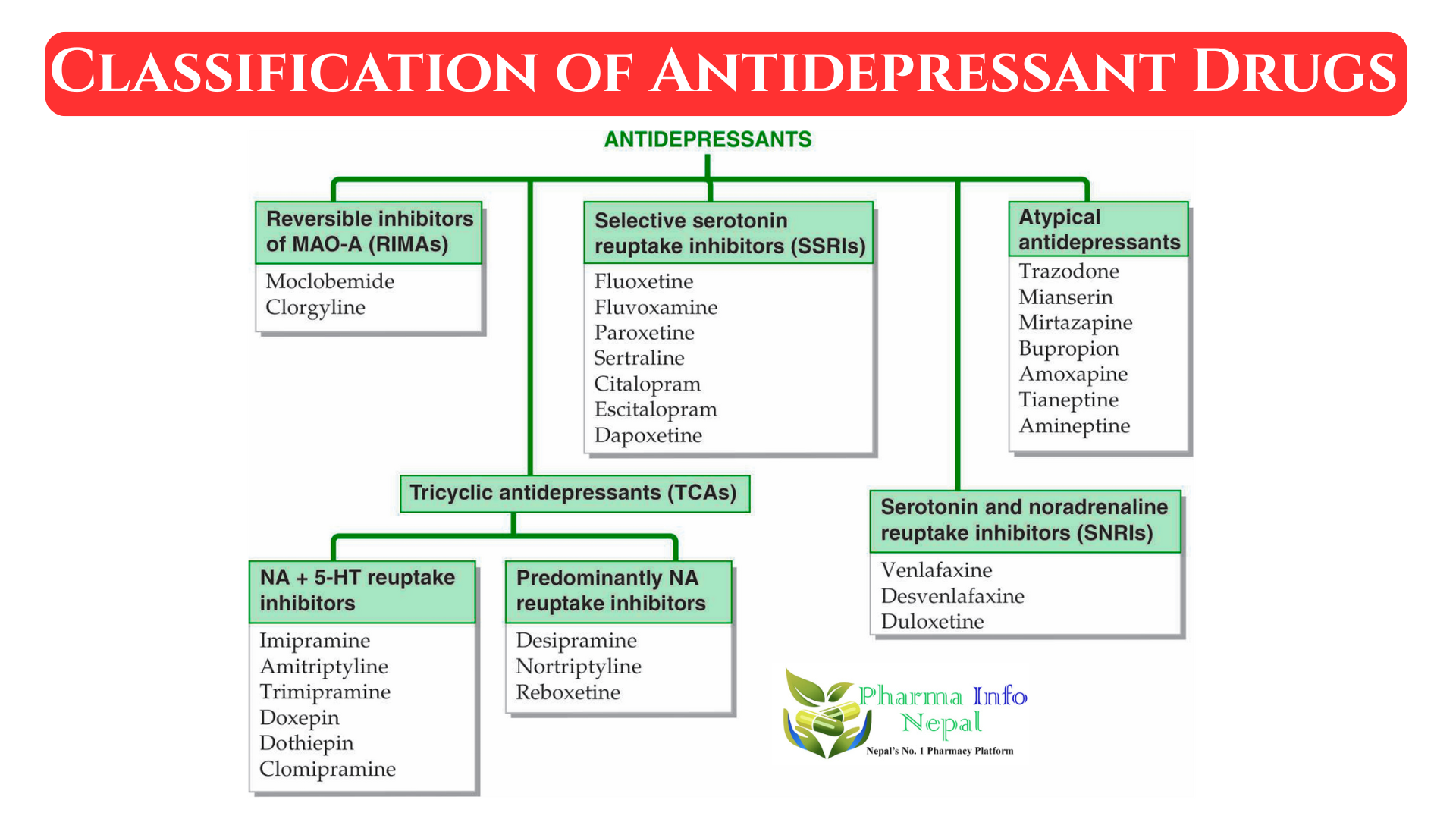
Classification of Antidepressant Drugs
Antidepressants are broadly classified based on their chemical structure and mechanism of action:
Tricyclic Antidepressants (TCAs)
Examples: Amitriptyline, Imipramine, Nortriptyline, Clomipramine
Mechanism: Inhibit reuptake of serotonin (5-HT) and norepinephrine (NE) at synaptic clefts.
Side effects: Sedation, dry mouth, constipation, blurred vision, cardiac toxicity.
Uses: Major depression, neuropathic pain, migraine prophylaxis.
Selective Serotonin Reuptake Inhibitors (SSRIs)
Examples: Fluoxetine, Sertraline, Paroxetine, Citalopram, Escitalopram
Mechanism: Selectively inhibit reuptake of serotonin, increasing its level in the brain.
Advantages: Fewer side effects compared to TCAs and safer in overdose.
Side effects: Nausea, insomnia, sexual dysfunction.
Uses: Depression, anxiety disorders, OCD, panic disorder.
Serotonin–Norepinephrine Reuptake Inhibitors (SNRIs)
Examples: Venlafaxine, Duloxetine, Desvenlafaxine
Mechanism: Block reuptake of both serotonin and norepinephrine.
Uses: Depression, generalized anxiety disorder, neuropathic pain, fibromyalgia.
Monoamine Oxidase Inhibitors (MAOIs)
Examples: Phenelzine, Tranylcypromine, Isocarboxazid
Mechanism: Inhibit MAO enzyme responsible for breakdown of monoamines (5-HT, NE, DA).
Caution: Avoid tyramine-rich foods (e.g., cheese, wine) → risk of hypertensive crisis.
Uses: Atypical depression, resistant depression.
Atypical (or Newer) Antidepressants
These drugs have unique mechanisms and are used when conventional drugs are not effective.
| Drug | Mechanism | Remarks |
|---|---|---|
| Bupropion | Inhibits dopamine and norepinephrine reuptake | Helps in smoking cessation |
| Mirtazapine | α2 antagonist → increases NE and 5-HT release | Sedative; increases appetite |
| Trazodone | Serotonin antagonist and reuptake inhibitor | Causes sedation; used in insomnia |
| Vilazodone, Vortioxetine | Modulate serotonin receptor activity | Newer generation antidepressants |
Serotonin Modulators
Examples: Nefazodone, Trazodone, Vortioxetine
Mechanism: Modulate serotonin receptor and inhibit its reuptake — improving mood with fewer sexual side effects.
Mechanism Summary
Antidepressants act by:
- Increasing serotonin, norepinephrine, and/or dopamine levels in the brain.
- Enhancing neurotransmission in mood-regulating pathways.
- Promoting neuroplasticity and recovery of normal brain function.
Clinical Notes
- Antidepressants require 2–4 weeks for full therapeutic effect.
- Abrupt withdrawal may cause discontinuation syndrome.
- Choice of drug depends on patient symptoms, tolerance, and comorbid conditions.
Conclusion
Understanding the classification and mechanism of antidepressant drugs helps pharmacists and healthcare professionals choose the right therapy for each patient. With proper counseling and monitoring, these medications can greatly improve quality of life for those suffering from depression and related disorders.
Pharma Info Nepal — Your trusted platform for pharmacy education and exam preparation.