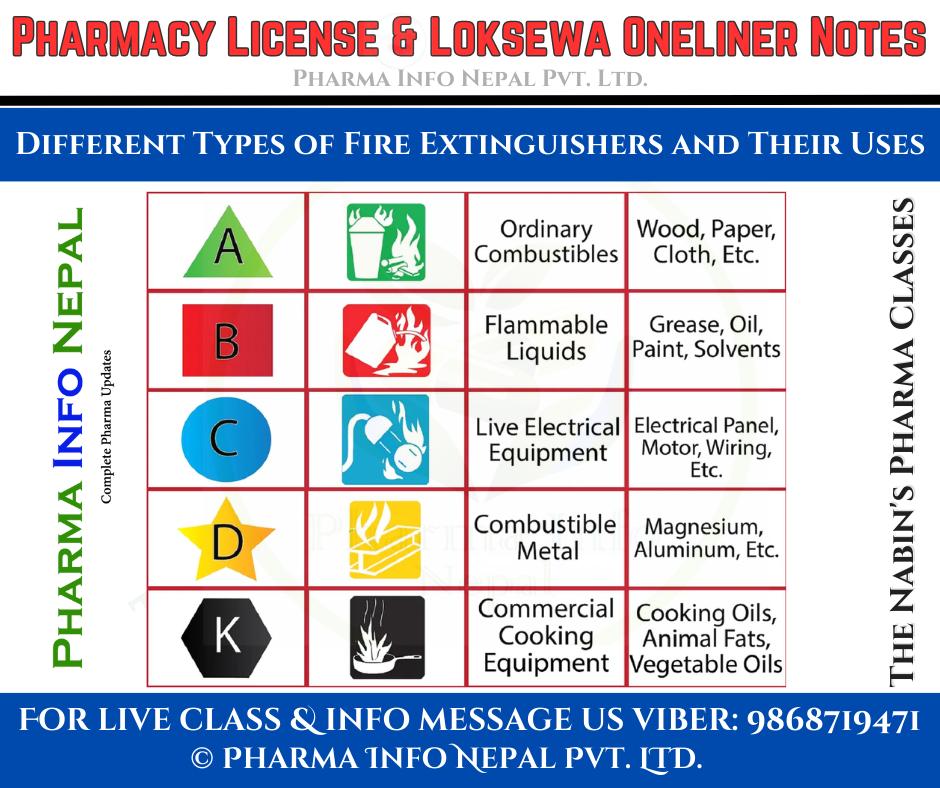
Fire Extinguishers: Composition, Colour Codes, Uses, and Limitations
Fire extinguishers are one of the most important safety tools used in hospitals, pharmacies, industries, offices, and households. They are designed to control or extinguish small fires before they spread. To ensure proper use, it is essential to understand their composition, colour codes, uses, and situations where they should not be used.
Composition of Fire Extinguishers
Fire extinguishers are filled with different extinguishing agents depending on the type of fire:
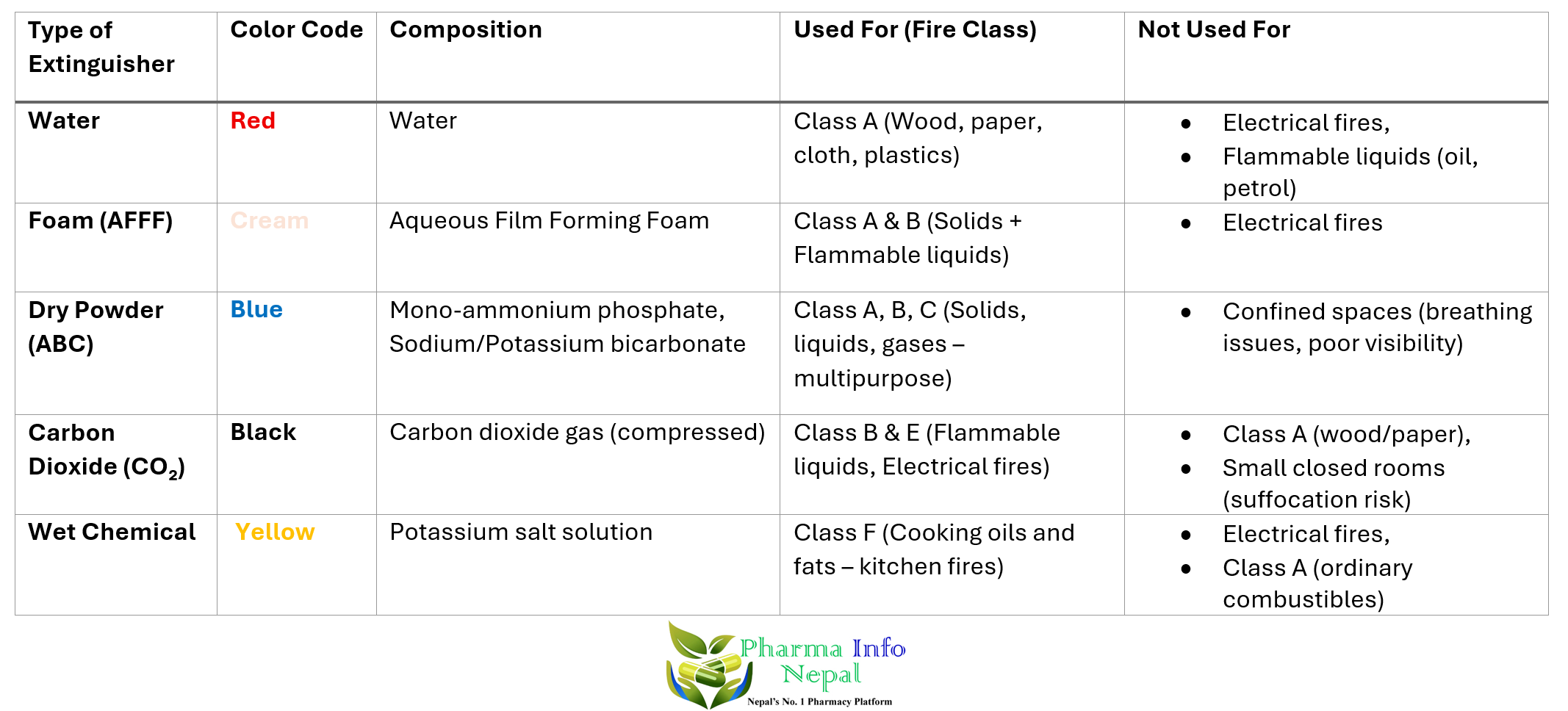
- Water – For ordinary combustibles like wood, paper, and cloth.
- Foam (AFFF) – Contains aqueous film forming foam, effective for liquid fires.
- Dry Powder – Made of mono-ammonium phosphate, sodium or potassium bicarbonate; multipurpose.
- Carbon Dioxide (CO₂) – Stored as compressed liquid, works well for electrical and liquid fires.
- Wet Chemical – Contains potassium salts, ideal for cooking oil/fat fires.
Fire Extinguisher Colour Codes and Uses
Key Points to Remember
- Always check the label and colour code before using a fire extinguisher.
- Match the fire type (Class A, B, C, D, E, F) with the right extinguisher.
- Using the wrong extinguisher can worsen the fire or cause accidents.
- In pharmacies, hospitals, and industries, CO₂ and Dry Powder extinguishers are most commonly used due to frequent risks of electrical and chemical fires.