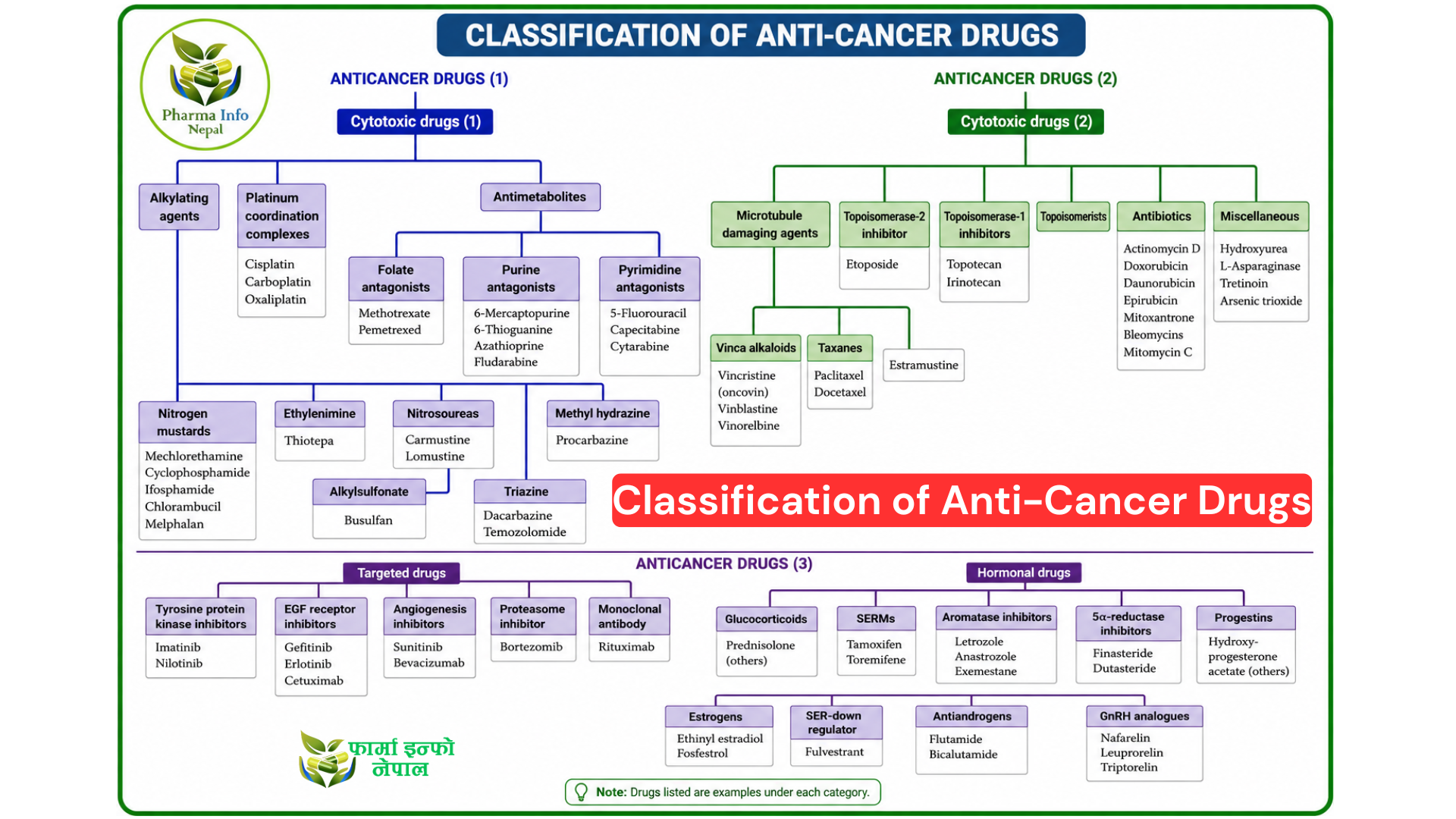
Classification of Anti-Cancer Drugs
Classification of Anticancer Drugs: Types, Mechanism, Examples & Mnemonics
Cancer chemotherapy consists of a diverse group of drugs that destroy cancer cells through different mechanisms. Anticancer drugs are broadly classified into cytotoxic drugs, targeted therapy, and hormonal therapy. Understanding this classification is essential for B.Pharm, M.Pharm, Pharmacy License, Lok Sewa, and other competitive pharmacy examinations.
What are Anticancer Drugs?
Anticancer drugs (antineoplastic drugs) are medications used to prevent, destroy, or inhibit the growth and spread of malignant (cancer) cells. These drugs may act by:
- Damaging DNA
- Inhibiting DNA/RNA synthesis
- Preventing cell division
- Blocking growth factor receptors
- Modulating hormones responsible for tumor growth
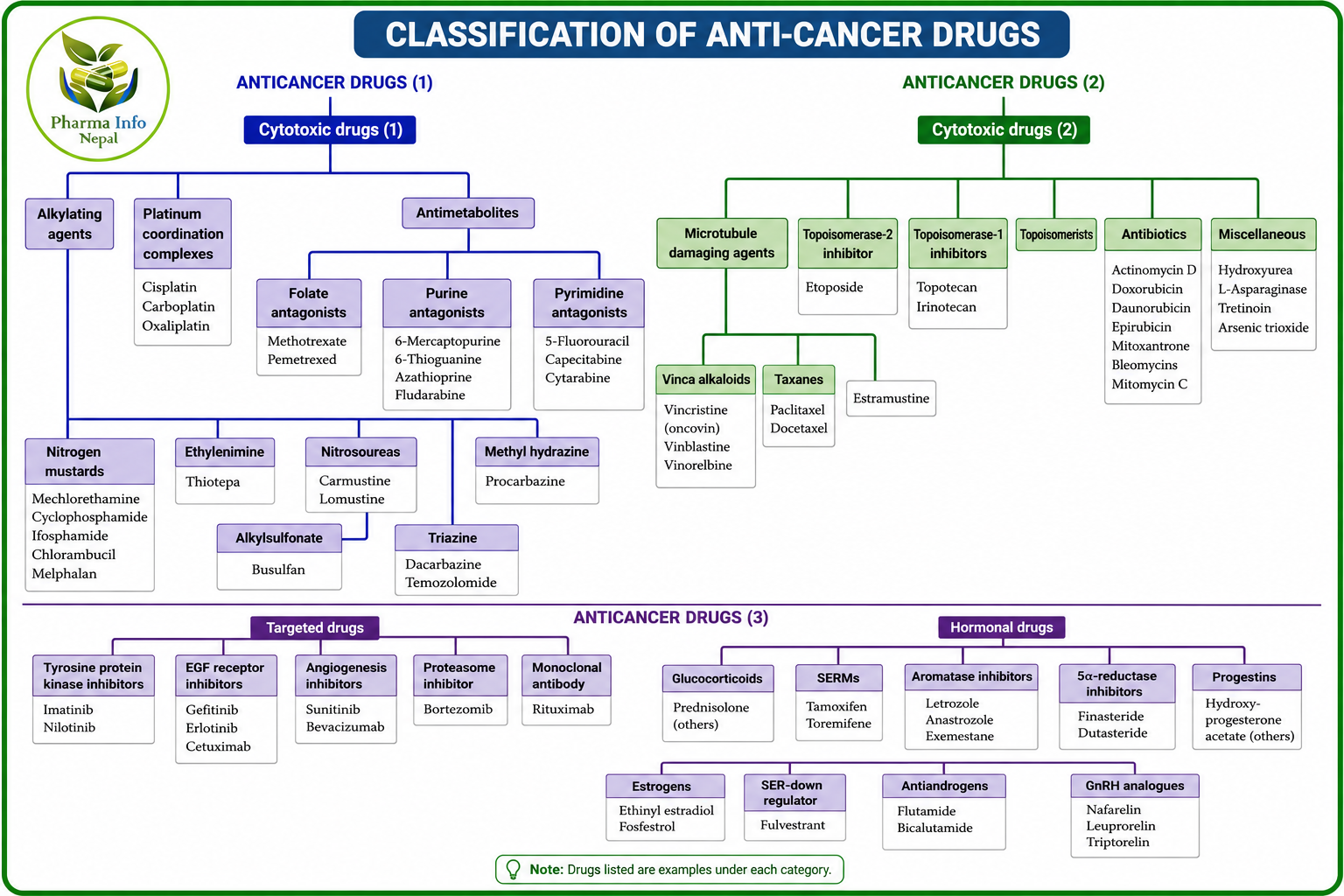
Classification of Anticancer Drugs
- Cytotoxic Drugs
Cytotoxic drugs directly kill rapidly dividing cells by interfering with DNA replication or cell division.
- Alkylating Agents
These drugs form covalent bonds with DNA, causing cross-linking and inhibition of DNA replication.
Nitrogen Mustards
- Mechlorethamine
- Cyclophosphamide
- Ifosfamide
- Chlorambucil
- Melphalan
Ethylenimine
- Thiotepa
Alkyl Sulfonate
- Busulfan
Nitrosoureas
- Carmustine
- Lomustine
Triazines
- Dacarbazine
- Temozolomide
Methylhydrazine
- Procarbazine
- Platinum Coordination Complexes
These agents act similarly to alkylating agents by producing DNA cross-links.
Examples:
- Cisplatin
- Carboplatin
- Oxaliplatin
- Antimetabolites
Antimetabolites inhibit DNA synthesis by mimicking normal cellular metabolites.
Folate Antagonists
- Methotrexate
- Pemetrexed
Purine Antagonists
- 6-Mercaptopurine
- 6-Thioguanine
- Azathioprine
- Fludarabine
Pyrimidine Antagonists
- 5-Fluorouracil (5-FU)
- Capecitabine
- Cytarabine
- Microtubule-Damaging Agents
These interfere with mitotic spindle formation during cell division.
Vinca Alkaloids
- Vincristine
- Vinblastine
- Vinorelbine
Taxanes
- Paclitaxel
- Docetaxel
Others
- Estramustine
- Topoisomerase Inhibitors
These inhibit enzymes involved in DNA replication.
Topoisomerase II Inhibitor
- Etoposide
Topoisomerase I Inhibitors
- Topotecan
- Irinotecan
- Antitumor Antibiotics
These interfere with DNA and RNA synthesis.
Examples:
- Actinomycin D
- Doxorubicin
- Daunorubicin
- Epirubicin
- Mitoxantrone
- Bleomycin
- Mitomycin C
- Miscellaneous Cytotoxic Drugs
- Hydroxyurea
- L-Asparaginase
- Tretinoin
- Arsenic Trioxide
- Targeted Therapy
Targeted drugs specifically attack molecular targets present in cancer cells while causing comparatively less damage to normal tissues.
Tyrosine Kinase Inhibitors (TKIs)
Examples:
- Imatinib
- Nilotinib
EGFR Inhibitors
Examples:
- Gefitinib
- Erlotinib
- Cetuximab
Angiogenesis Inhibitors
Prevent formation of new blood vessels supplying tumors.
Examples:
- Sunitinib
- Bevacizumab
Proteasome Inhibitor
Example:
- Bortezomib
Monoclonal Antibody
Example:
- Rituximab
- Hormonal Therapy
Hormonal drugs are mainly used in hormone-dependent cancers such as breast and prostate cancer.
Glucocorticoids
- Prednisolone
Selective Estrogen Receptor Modulators (SERMs)
- Tamoxifen
- Toremifene
Aromatase Inhibitors
- Letrozole
- Anastrozole
- Exemestane
5α-Reductase Inhibitors
- Finasteride
- Dutasteride
Progestins
- Hydroxyprogesterone acetate
Estrogens
- Ethinyl Estradiol
- Fosfestrol
Selective Estrogen Receptor Down-Regulator (SERD)
- Fulvestrant
Antiandrogens
- Flutamide
- Bicalutamide
GnRH Analogues
- Nafarelin
- Leuprorelin
- Triptorelin
Quick Summary
| Main Class | Subclass | Common Examples |
| Alkylating Agents | Nitrogen mustards | Cyclophosphamide, Ifosfamide |
| Platinum Compounds | Platinum complexes | Cisplatin, Carboplatin |
| Antimetabolites | Folate, Purine, Pyrimidine antagonists | Methotrexate, 5-FU |
| Microtubule Inhibitors | Vinca alkaloids, Taxanes | Vincristine, Paclitaxel |
| Topoisomerase Inhibitors | Topo I & II | Irinotecan, Etoposide |
| Antibiotics | Anthracyclines & others | Doxorubicin, Bleomycin |
| Targeted Therapy | TKIs, EGFR inhibitors | Imatinib, Gefitinib |
| Hormonal Therapy | SERMs, Aromatase inhibitors | Tamoxifen, Letrozole |
Easy Mnemonic
“A PAT TAM H”
- A – Alkylating agents
- P – Platinum compounds
- A – Antimetabolites
- T – Topoisomerase inhibitors
- T – Tubulin (Microtubule) inhibitors
- A – Antitumor antibiotics
- M – Miscellaneous drugs
- H – Hormonal therapy
Important Examination Points
- Cyclophosphamide is the most commonly used alkylating agent.
- Cisplatin is highly effective against testicular and ovarian cancers.
- Methotrexate is a folate antagonist.
- 5-Fluorouracil is a pyrimidine analogue.
- Vincristine causes peripheral neuropathy with minimal myelosuppression.
- Paclitaxel stabilizes microtubules and prevents their depolymerization.
- Doxorubicin is associated with dose-dependent cardiotoxicity.
- Bleomycin primarily causes pulmonary fibrosis.
- Imatinib is the drug of choice for chronic myeloid leukemia (CML).
- Tamoxifen is widely used in estrogen receptor-positive breast cancer.
- Letrozole and Anastrozole are first-line aromatase inhibitors in postmenopausal breast cancer.
- Toxicity of Methotrexate is minimized by Leucovorin (Folinic acid)
- Cyclophosphamide toxicity minimized by MESNA
Anticancer drugs are broadly classified into cytotoxic agents, targeted therapies, and hormonal therapies, each acting through distinct mechanisms to inhibit cancer growth. A clear understanding of their classification, mechanisms, and representative examples is essential for clinical practice and for success in pharmacy examinations such as the Nepal Pharmacy Council License Examination, Lok Sewa, B.Pharm, and M.Pharm entrance examinations. Mastering this classification also provides a strong foundation for studying individual anticancer drugs, their adverse effects, and therapeutic applications.